Skip to content

Firsthand.today

#AI coding

  1. Why Johnny Can't Patch

    dfarq.homeip.net · Dave Farquhar

    AI is finding vulnerabilities faster and more serious than humans did, pushing 2026 past double last year's CVE count. Having applied roughly 900,000 patches with a 21-day mean time to remediate, I argue the real blocker is money and incentives, not tooling.

  2. How is your org handling AI peer-review?

    r/ExperiencedDevs · SagansCandle · 177 comments

    Reviewing AI PRs where comments get pasted back into AI kills the discussion: authors don't defend decisions, don't learn, and the reviewer becomes the bottleneck blamed for lateness.

    — NasKe
  3. GPT-6.2 Sol vs. Claude Opus 5.5: Three Head-to-Head Tests

    X · LDT0545

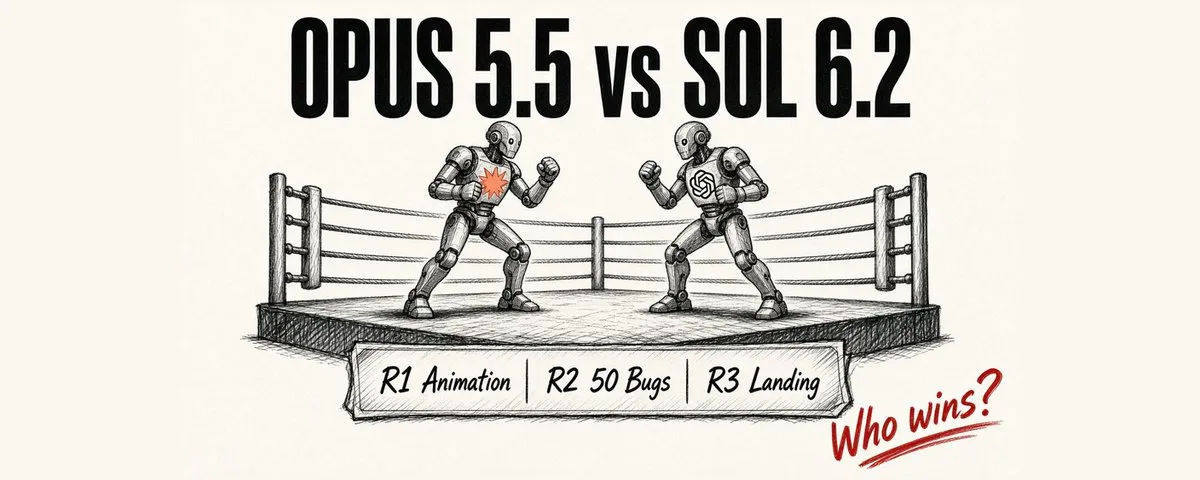
    Same prompts to both models across a 3D animation, a 2,000-line Node.js project with 50 planted bugs, and a landing page. Opus 5.5 found 50/50 bugs in about 2.5 minutes and made better-looking output; GPT-6.2 Sol found 49/50 in about 8 minutes but shipped fewer broken features.

  4. How to write prompts for Claude Code: write a brief, not a wish

    X · Innovati_nParty

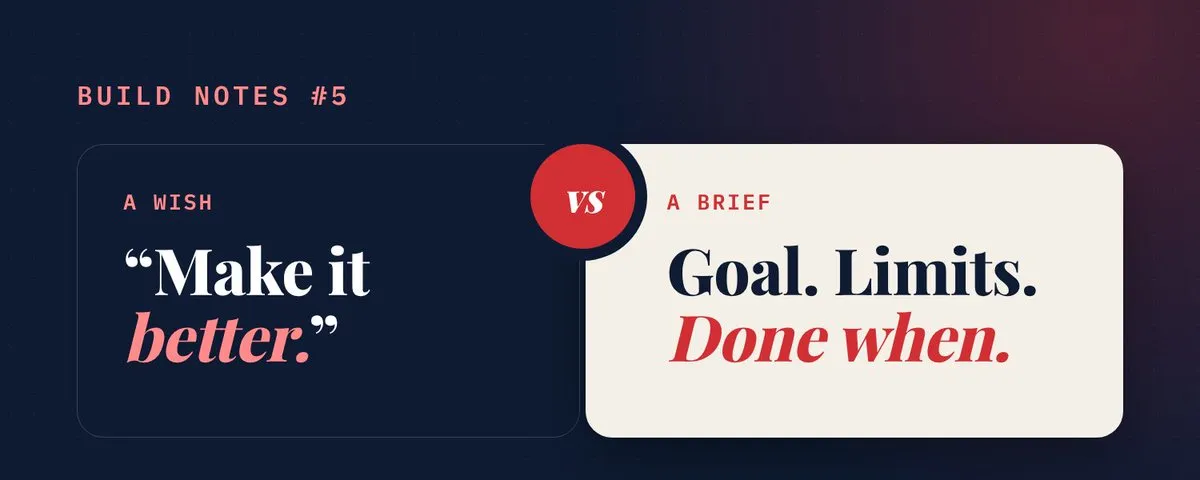
    Claude Code fills any gap in a request with a reasonable guess, so a good prompt is a six-part brief: goal, audience, context, constraints, must-never, and done-when. A blog cover redesign failed on "make them more attractive" and succeeded once the brief capped covers at 18 words with no bullet lists.

  5. Half of What AI Delivers Needs Rework: After Logging 204 Dispatches, Managing AI Is Managing a Team

    liuqiwei.dev · 刘启威

    Over three weeks and 204 dispatches to five coding agents, first-pass acceptance stayed near 50% (Codex 38%, Antigravity 51%, DeepSeek Harness 50%), yet final pass rates reached about 80% through independent cross-model acceptance, a two-round rework cap and written completion definitions. The biggest cost was the coordinator re-reading context, once 39 million cached tokens in a single task.

  6. I Used 664 Million Tokens to Build My Favorite App Yet

    alexlieberman.com · Managing Partner of Tenex

    A non-engineer built Bricker, an AI LEGO-set generator with 3D models, parts lists and step-by-step instructions, in four days using Claude Code at a cost of about $1,200 in API credits and 664 million tokens.

  7. 16 weeks of making a game with Claude Opus in Godot

    r/vibecoding · RUSuper · 31 comments

    The economy model built on a gold simulator reflects an optimal or scripted player; real players wander and skip content, so log demo session data (gold per hour, time per zone) and tune against it instead.

    — Total-Reasonable
  8. I Vibe Coded a SaaS Product. Then I Had to Actually Build It.

    rameyroad.com · Jason Moore

    A multi-tenant SaaS started as a vibe-coded project in March and reached ~1,000 commits, 330 merged PRs and ~1,900 backend tests by September. The author details the silent bugs that slipped through and the merge gate and real-database tests that fixed them.