Skip to content

Firsthand.today

#testing

  1. Why Johnny Can't Patch

    dfarq.homeip.net · Dave Farquhar

    AI is finding vulnerabilities faster and more serious than humans did, pushing 2026 past double last year's CVE count. Having applied roughly 900,000 patches with a 21-day mean time to remediate, I argue the real blocker is money and incentives, not tooling.
  2. Claude Code Best Practices: 8 Habits From Real Solo Builds

    shahriaemon.com · Shahria Emon

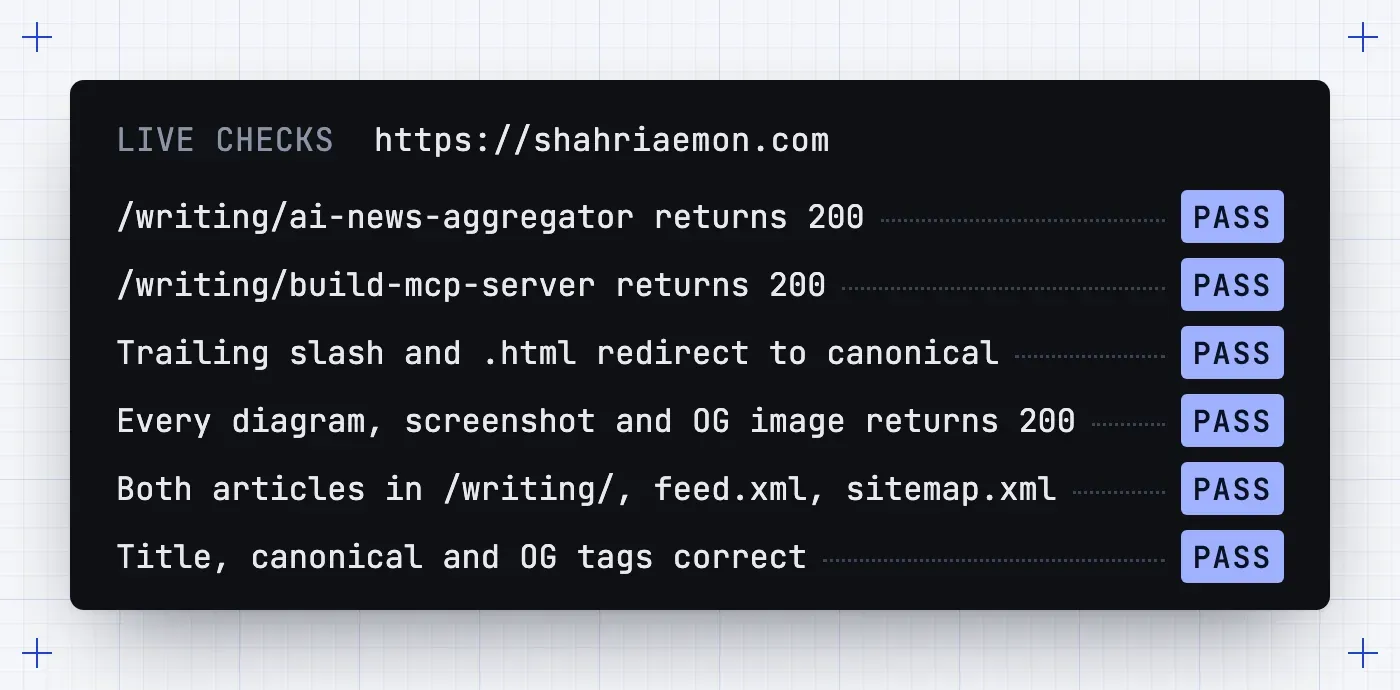
    After shipping a Telegram news bot, a finance app and a site rebuild solo with Claude Code, a developer lists eight habits that mattered: prototype first, write the spec, define done as verified live, test the rule across every day, mock external services, keep tests off production, build fallbacks, and demand measured numbers only.

  3. First experiences with spec-driven development

    warrenmar.com

    Running GitHub's Spec-kit with Claude Code Auto mode, the agent worked about 4 hours unattended before hitting quota, and a weekend two-person hackathon became roughly an hour of spec writing plus an overnight run and 1-2 hours of fixes. Tests are essential to steer the agent; compaction corrupts new specs.

  4. Making 3D heads with AI: what survived was having AI write Blender Python

    X · gomezdoworks

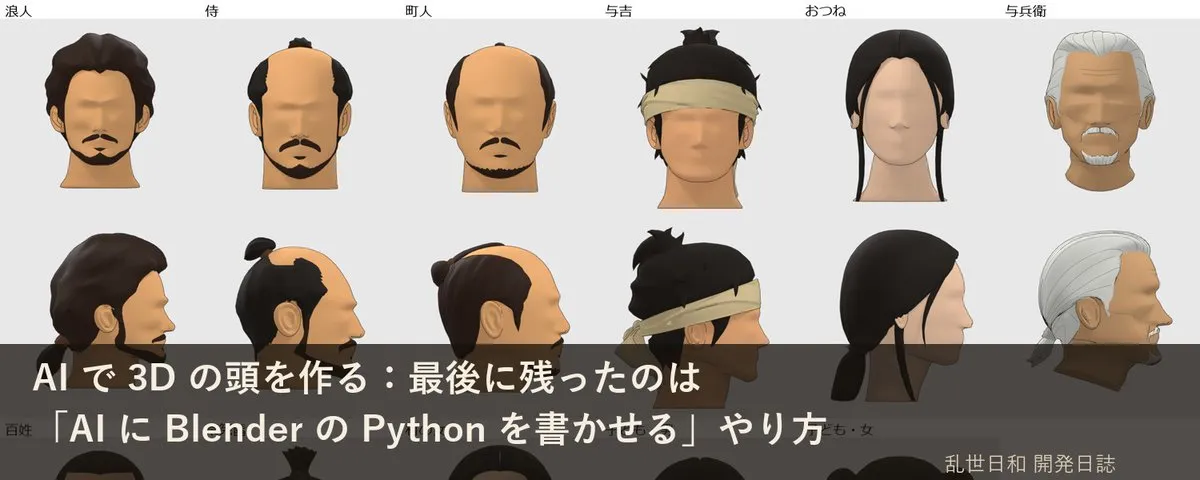
    Over about a month, four head-modeling approaches failed (TripoSR, UE Geometry Script, visual hull, ellipsoids), as did TripoSG and Tripo. The method that worked: Codex writes Blender Python, renders headless, inspects the images and fixes, about 19 minutes and 93k tokens per pass.

  5. How the Claude Code team thinks about verification

    claude.dev · Addy Osmani · 233 comments

    The verification workflow is token-expensive; a verify skill raised trust in AI coding but used much more time and spend, so simple changes still skip it and DeepSeek was adopted as the cheaper workhorse.

    — gregwebs
  6. I fix vibe-coded apps for a living, and they all have the same problems

    makeuseof.com · Jayric Maning

    A developer who repairs vibe-coded apps for clients says the same four failures recur: no reproducible dev environment or Git history, no logging or error handling, secrets and authorization left exposed, and feature creep without boundaries. Each comes with a concrete fix and prompt.

  7. How to build an AI MVP: lessons from shipping three AI products

    iftiak.com · Iftiak Ahamed Product Manager, Product Designer

    Across LeanDeck, SportsOnTV and Varsee, the hard decisions were where AI acts, what it returns, how to test it and who reviews it. Proposals dropped from 6–10 hours to about 5 minutes; invoicing stayed on fixed rules; SportsOnTV launched with per-summary human review, later removed after tuning.

  8. I Vibe Coded a SaaS Product. Then I Had to Actually Build It.

    rameyroad.com · Jason Moore

    A multi-tenant SaaS started as a vibe-coded project in March and reached ~1,000 commits, 330 merged PRs and ~1,900 backend tests by September. The author details the silent bugs that slipped through and the merge gate and real-database tests that fixed them.

  9. How to Measure the Time AI Saves Your Business

    mikeleembruggen.com · Michael Leembruggen

    A consultant's practical method for small businesses to measure AI time savings: time one repeated task 5-10 times before switching, log the whole job including prompting and checking, track quality markers, then decide to keep, tweak or drop each workflow.

  10. Postmortem: Making CUT THE COUNT in Four Days with Claude Code

    hiroyukitsunoda.itch.io · HiroyukiTsunoda

    A solo developer built a documentary-editing game in four days for an AI game jam, handing all C++ and editor scripting to Claude Code connected to Unreal Editor over MCP. The postmortem details the split of labor, the work-log practice, and the failures that became rules.

  11. How do you orchestrate multiple agents?

    r/AI_Agents · kwerkee · 61 comments

    Give each parallel writer its own git worktree and have sub-tasks open a PR that stops once CI passes, with one landing task putting changes on main serially; this prevents agents overwriting each other's uncommitted files.

    — zzunkie, amargolin