规格驱动开发的初次实践
First experiences with spec driven development
摘要
用 GitHub 的 Spec-kit 配合 Claude Code Auto 模式,Agent 可无人值守运行约 4 小时后触达配额上限;原本两人两天的周末黑客松,变成约 1 小时写规格、通宵运行、再花 1-2 小时修问题。测试是引导 Agent 的关键,上下文压缩会搞坏新规格的生成。
正文
Updated 29 May 2026
JetBrains has a Spec-Driven Development with Coding Agents class on deeplearning.ai. I took the class since I hoped it would help with tokenmaxxing. Spend tokens on the spec, so you have a long list of tasks. Spend tokens on the tasks without any human intervention using Auto mode in Claude Code. Anthropic increased the quota limits for Pro subscriptions through a deal with SpaceX. Perfect time to try.
Claude Code ran for about 4 hours without any intervention before I hit my quota limit. The quota is large enough now, that I can have it running for most of the 5 hour window. If I’m only running one agent at a time, this doesn’t seem too bad. While Claude was working, I was looking for a replacement using opencode.
I noticed that the session would be in a weird state and mess up the creation of new specs. I think this is due to compaction. I should start a new session with each spec to avoid compaction.
I am using the Spec-kit from github. I keep forgetting the optional commands, which do make things better. To the point that I wouldn’t consider them optional, especially if you are tokenmaxxing. The tasks also have some parallelization which is mentioned explicitly when it is able to do so.
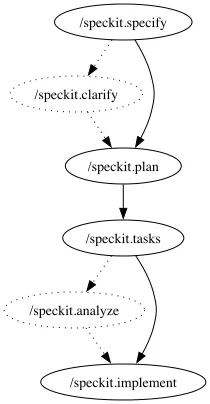
Spec-kit workflow
I spend less time coding, more time waiting. More time fixing things that were under specified. As you are building manually, you have some idea of the spec as you go. I think tests are a must since they help steer the coding agent to the correct solution. As long as something is verifiable, the agent can make progress. Haiku isn’t smart enough. Sonnet is good enough for default. Haven’t had to break out Opus yet.
I need to do increasingly difficult and longer time horizon tasks to know whether or not AI capability is improving.
We are at a point that the agent can slog away all night and you can wake up with an application with some minor issues since it was under specified.
Another issue is that it is bad to modify the code by hand, because the coding agent will lose context of the changes. It will refer to what it has written, not what is currently written to disk. If you want to make changes, it is best to make the agent do it.
Also, work stops when you run out of tokens. There is so much code written, it doesn’t feel worth it to look at the code. If you are only after the end product, the code is irrelevant. All that matters is if the application is within spec and it feels right. You could change one word (framework, programming language, etc) in the spec and all the code would be different. You need to wait for tokens before work can continue again. In this way, AI is like electricity. Work stops when the lights are out. It feels like you are an addict if you are paralyzed without tokens.
规格驱动开发在全新项目上效果拔群,但我还没在遗留项目上试过。如果你对某个东西有了新点子,可以花一小时写规格,然后睡一觉,醒来就有一个应用了。
原本需要两个人组队、花一个周末两天做的黑客松项目,现在变成一个人花一小时写规格,再让 Agent 整夜烧 token。之后还要再花一两个小时,处理使用应用时因 bug 或规格写得不够细而暴露出来的问题。
本文为中文翻译,版权归原作者所有,内容以原文为准。
这篇对你有用吗?
相关文章
用 AI 做 3D 头部:最后留下的方法是让 AI 写 Blender Python
X · gomezdoworks
复盘:用 Claude Code 四天做出 CUT THE COUNT
hiroyukitsunoda.itch.io · HiroyukiTsunoda
我把 Mac 的内存压力从 65% 降到约 17%
X · qiweiiiy
用 Claude 做 vibe coding:179 个 PR 如何搭起我的网站
christos.studio · Christos Stavrou
我靠修 vibe coding 出来的应用为生,它们的问题几乎一模一样
makeuseof.com · Jayric Maning